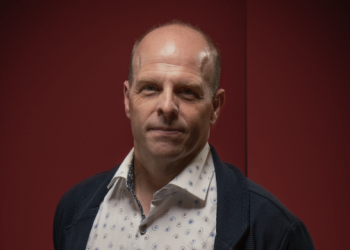
Calvin Benchimol: I kept seeing excellent superintendents and foremen holding projects together through sheer effort. Constant site walks. Endless coordination across trades. Manually reconciling what was planned versus what was actually happening. Construction is dynamic. Sequencing shifts. Deliveries move. One trade slipping impacts three others. In that environment, even the best leaders are fighting entropy every day.
The moment it clicked for me was realizing that predictability relied more on individual stamina than on a reinforced system. When outcomes depend on heroics instead of operational structure, that’s not a talent problem, it’s an infrastructure gap. That’s when I knew this was worth building around.
Early Assumptions About Construction Productivity
Calvin Benchimol: We didn’t start by trying to collect better data. We started by trying to gamify recognition. The idea was simple: when teams hit short-term milestones, we celebrate it. Make progress visible. Reinforce momentum. What we learned quickly is that recognition only works if short-term planning and communication are strong, and that’s incredibly hard on a live jobsite. Industrial sites are fluid. Multi-trade collaboration creates constant dependencies. Plans shift daily.
Even great leaders struggle to maintain consistent short-term alignment when sequencing is constantly evolving. That’s when we realized productivity isn’t just about motivation. It’s about clear plans and quick communication that survives real-world complexity.

Why Technology Hasn’t Solved Construction Productivity
Calvin Benchimol: Construction is a people business operating in a highly fragmented system. You have multiple trades working in tight coordination, overlapping scopes, shifting sequences, and constant ripple effects when something moves. A delay in one crew can cascade across the project.
Technology has helped with documentation and reporting. It has primarily helped office roles and subject matter experts (such as safety or estimating) capture what has already happened or manage risk through audits and compliance reports. The gap we see is in forward looking operational tools built for the people doing the work in the field.
Productivity is driven by leading indicators that are identified early and actioned proactively. Leading indicators such as: activities planned for the week, progress updates communicated with trades, obstacles identified, behavior based observations shared with workers, and more. These are hard to observe because collecting and acting on them requires a lot of time that site leaders don’t have. I don’t think the industry has overlooked effort. I think it’s been missing an operational layer that encourages leading indicators without increasing admin work.
Moving Beyond Dashboards to Frontline Behavior
Reporting matters. Leaders need visibility. But reporting is lagging by nature. Construction performance is shaped by what happens as crews prepare for that concrete pour scheduled for 11 AM. Not just what’s summarized at the end of the week.
Great superintendents already manage leading indicators manually. They walk the site. They coordinate trades. They chase updates. They reinforce daily targets. That discipline works, but it relies heavily on individual effort. We’re building the operational layer that reinforces those habits without adding administrative weight. Instead of asking the field to produce more reports, we focus on making short-term planning and communication easier to maintain, especially across multiple trades who’s sequencing constantly shifts.
What Construction Jobsites Could Look Like in Five Years
If we succeed, jobsites become less dependent on heroics and more dependent on scalable systems that can be taught to and learned by the next generation of leaders coming up the ranks.
Five years from now, high-performing projects will have:
- Site leaders using industry best practices to plan, manage and execute.
- Clear short-term targets aligned across trades
- Early visibility into sequencing conflicts
- Faster escalation of constraints before blockers halt work
- Less manual chasing for updates
- More predictable weekly output
The biggest shift won’t be more technology, it will be fewer surprises. Construction will always be complex. But when leading indicators are visible without adding administrative effort, leaders spend less time firefighting and more time improving performance. If you’re exploring ways to increase jobsite predictability, improve field performance, and reduce reactive firefighting, Crewscope offers a forward-looking operational layer built for construction leaders.
From jobsite heroics to scalable operational systems, Crewscope is redefining how frontline teams drive predictable construction performance.
Crewscope is also part of the DMZ startup ecosystem, a global tech incubator supporting founders as they scale and grow.
 Ayush Gurung, Content Writer, TechBeat Canada, covers stories about technology, innovation, and the people shaping Canada’s tech scene. He loves exploring how ideas turn into impact, from startups to big industry shifts. At times, you’ll find him working out, playing soccer, or discovering new places in the city. Ayush@techbeat.ca