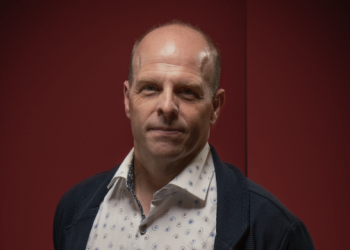

Ida Tin: The Visionary Who Coined “FemTech” and Redefined Women’s Health
When Ida Tin launched Clue, she was not just creating a product she was rewriting the narrative of women’s health in tech. What started as a simple idea to help people track their menstrual cycles evolved into a global platform that empowered millions to better understand their bodies.
You coined the term FemTech, a word that’s now shaping an entire global industry. Can you take us back to that moment? What did you hope it would represent, and how does it feel to see it evolve into a movement?
I could see that there was a bunch of start-ups working female health and that it was really hard to describe why this was not niche products. And I understood that if we put them next to each other, they together with forming a whole new category on the rise. And one that I could see had immense potential. I wanted us to be understood as one big thing happening in tech.
I don’t think I understood what the power could be of one word. It has helped people building Femtech find each other and feel part of a community and it has helped us understand what a massive industry we are building together. I also think it has made it easier for male investors to recognise this as a high potential business area.
Building Clue wasn’t just about an app, it was about reframing how the world talks about women’s health. What were some of the biggest societal or investor challenges you faced early on when pitching something so ahead of its time?
I think the biggest challenge then and still is to make people who don’t have these lived experiences because of female biology to understand how close to heart those issues are, that they are not nice to haves but extremely essential to our health well-being of participation in the world of having a voice of shaping the world and I think essentially to create a healthy and more balanced planet.
You’ve spoken about mission-driven entrepreneurship. How do you balance purpose with business scalability especially in a space where both data sensitivity and cultural perceptions play such critical roles?
In my mind it should be good business to treat user data with respect, to treat employees in a way so that their long-term health is prioritised, to build business models that doesn’t deplete but creates value for all parties involved. Being emotionally intelligent and tuned in with your users is essential to building a product that feels right in women’s health.
Those are skills that a business can prioritise and build. Those are probably good capabilities to have in any business but in women’s health, they are critical. Which is also one of the reasons that those companies and products must be built with women’s participation and not by men alone. I am all for men being part of Femtech. We need them to build these products with us to regulate them to fund them and many other functions, but they must do that on eyelevel with women.
The FemTech ecosystem has grown rapidly, yet many say we’re only scratching the surface. What areas of women’s health or body literacy do you think remain overlooked or ripe for innovation?
When you look across the women’s health landscape you will see many gaps in the map. We have data gaps we have science gaps we have product gaps we have funding gaps we have research gaps we have cultural gaps we have awareness gaps we have policy gaps. And all of these gaps up potential areas for innovation for business ideas for cultural innovation and for better outcomes.
Looking ahead, what excites you most about the future of FemTech and how technology, AI, and data science can reshape healthcare for women worldwide?
I think it’s very exciting when we start being able to overlay data sets and understand how something like a cycle data can inform how we understand many other aspects of health. Or how hormonal data might be impacting things like cardiovascular health how to immune diseases or brain health. We also have reason to believe that with biomarker sensors we could detect things like risk for pre-eclampsia, postnatal depression or gestational diabetes.
Those are condition that that affect women not just during pregnancy but both her and the baby for life so the social and economical benefit for society to be better at diagnosing and treating these conditions could be enormous. And this is just one example there are many, many more basically as we start to care for women’s health we will gain incredible savings and unlock potential also economically for society.

Kavish Jha is a contributing writer at TechBeat Canada, where he highlights the stories behind Canada’s most innovative founders and startups. Passionate about technology, creativity, and community, he brings a storyteller’s lens to every feature. When he’s not exploring the next big tech trend, you’ll find him diving into marketing strategy or discovering inspiring creators.
📩 Reach out: Kavish@techbeat.ca