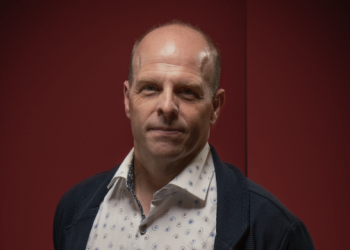

Serge Salager founded Visualping long before the world fully embraced automation and AI-driven workflows. What first inspired the idea of creating a tool that “watches the web for you,” and what problem were you personally trying to solve back then?
As Andy Grove famously said, “Only the paranoid survive.” Visualping is clearly made for those paranoid control freaks like me who want to know when something important happens on the web.
To answer your question, the inspiration actually came from a personal problem I faced years ago. Shortly after taking a tech company traded on the Toronto Stock Exchange private, we were approached by a potential buyer. I knew that this buyer was also in discussions with my competitors, so I became obsessed with trying to understand each move the buyer or my competitors were making during these very tense negotiations.
I was tracking, for example, their press release pages, their jobs or product pages for any signal of things moving in a direction we didn’t want to.
That experience made me realize there was no easy way to efficiently track changes across the web. I needed a tool that could watch the web for me and automatically alert me to relevant updates and track changes across websites automatically, so people can stay informed without spending hours manually checking.
When searching for tools that could monitor pages for changes, I came across three products that did a decent job but weren’t perfect. These were Visualping, an incredibly well-designed service created by 3 Swiss developers but hidden in a corner of the internet, a free service called ChangeDetection.com, which was the number one service at that time with 200,000 users and had a very good keyword alert engine, and Page Monitor, a Chrome Extension that had a similar amount of users.
I ended up selling the company I was the CEO of, and found myself out of a job. With the money I made, I then bought these 3 small tools from the developers that created them, rolled them up into one company and looked for investors to hire a team to stitch the different technology components together and grow the service. Because the UI and the UX were exceptional, I retained Visualping as the front window for the amalgamated application. At this juncture is where the entrepreneurial journey started.
Visualping started as a simple change-detection tool and has grown into a global platform used by millions, from individuals to Fortune 500 companies. What were some key turning points that shaped that growth journey?
Serge Salager: We operate on a product-led growth model where our product speaks for itself, and our success is fueled directly by the value we bring to our users. As our product is based on a freemium model, the perceived value is huge. People like to share the wealth, and this is how this perceived value encourages word of mouth. By relentlessly focusing on improving our product, we’ve doubled our user base organically over the past year. Along our journey, we’ve had a few key turning points indeed.
One big turning point in our journey was during the COVID-19 pandemic. People were struggling to find available vaccination appointments, and Visualping made it easy to get alerted when new slots opened. Visualping helped countless people secure appointments they might have otherwise missed, and earned us recognition from major news outlets like The Wall Street Journal, The Washington Post, and The Telegraph in the UK. I was fortunate enough to even be interviewed on CNBC News during prime time.
Another major milestone came this year with the rollout of our new AI features, which move beyond simple pixel-tracking to context-aware monitoring. Now, a user can set a specific condition for alerts, like “Alert me when a competitor posts a new blog announcing a new product.” Once Visualping detects a change that meets their criteria, we send them an email with a concise 1 to 2-sentence summary of the changes. This has been a huge upgrade for our product and has saved our customers countless hours by making sure they only get an alert from us when it actually matters.
The AI landscape is moving fast, and automation tools are becoming mainstream. How do you keep Visualping’s technology simple and human-centered while still pushing the boundaries of innovation?
Serge Salager: Our founding principle has always been to help people “stay in the know.” Even as our underlying technology grows more complex, our goal remains the same: to make life easier for the user. We keep the platform human-centered by making sure that every AI upgrade reduces friction rather than adds to it.
In the past, users would get alerts for small, irrelevant changes, such as shifting ads or cookie pop-ups. Now, they can simply enter a condition using a simple AI prompt like, “Alert me when my competitor posts a new press release about a funding raise,” and the AI does the analysis on whether the change is relevant. Once our AI models decide that the change matches the user’s criteria, Visualping sends an alert with a 1 to 2-line summary of what exactly changed. Since they only receive alerts that meet their specific criteria, users get far fewer notifications and spend significantly less time sifting through noise.
Every business nowadays is talking about integrating AI, but that often just creates more noise. We’re using AI to do the opposite, to make things simpler and easier for our users. These new features prioritize the user’s time and make Visualping significantly more intuitive to use.
As a founder and CEO, you have seen how user behaviour and expectations evolve over time. What has surprised you most about how people are using Visualping and how have those insights influenced your product roadmap?
Serge Salager: Visualping started with a simple idea: get rid of the refresh button. It was a way to monitor, detect, and alert you about changes without sitting in your browser and hitting refresh.
Simple enough, but as more users discovered Visualping, they’ve continually asked us to solve and own more of their problems.
Originally, the user wanted to know, “Did something change?” But that problem quickly changed into, “Tell me there was a change, analyze the change in the context of my job, alert the Sales team, update this spreadsheet, and trigger the rest of my workflow.”
Every month, we’re approached by organizations with a new problem we hadn’t heard of before… novel problems that these teams can’t seem to solve elsewhere.
Over time, that dynamic has forced us to continually rethink our roadmap. We continue to offer checks and alerts, but we’re also now solving complex problems as part of our customers’ data infrastructure or data intelligence stack.
The most significant shift in our road map came from a shift in our user base. Visualping was initially made thinking about a single user monitoring an out-of-stock product to get alerts. We now have entire teams monitoring thousands of pages, so the Visualping team now also spends a lot of time helping these large teams process these large amounts of detected changes.
One of our most recent launches is the Reports feature. It is widely used by competitive intelligence teams to consolidate competitive actions across different global markets into a single-page summary report. Users can even write AI prompts to suggest recommendations. Instead of manually drafting these updates, these competitive intelligence teams now simply validate Visualping’s output, shifting their focus from tedious summarization to high-value strategy.
Looking ahead, what is your vision for Visualping in the next five years? How do you see the future of web monitoring, automation, and trust evolving in an AI-first world?
We’re looking to scale Visualping to become a household name like Zoom or Dropbox, the go-to option for detecting website changes for individuals and businesses. We plan to expand our B2B segment while continuing to attract and serve our millions of individual users.
Another exciting frontier for us is in AI automation and agentic AI. In the future, the challenge for businesses won’t just be having AI agents that can perform tasks; it’ll be knowing precisely when those agents need to act.
That is where we fit in. We see Visualping serving as the critical trigger for the agentic AI ecosystem. In addition to our custom GPT with ChatGPT, we’ve already launched our own n8n node and Zapier integration that lets a Visualping alert serve as the trigger for complex workflows on these respective platforms.
From detecting a competitor’s new discount that prompts an automatic price match to catching a regulatory update that kicks off a compliance review, Visualping can provide the critical signal that turns a small website change into a fully automated business process.

Kavish Jha is a contributing writer at TechBeat Canada, where he highlights the stories behind Canada’s most innovative founders and startups. Passionate about technology, creativity, and community, he brings a storyteller’s lens to every feature. When he’s not exploring the next big tech trend, you’ll find him diving into marketing strategy or discovering inspiring creators.
 Reach out: Kavish@techbeat.ca