What problem did you set out to solve with Bevel, and what gap did you see in how startups and scaling companies build operational teams today?
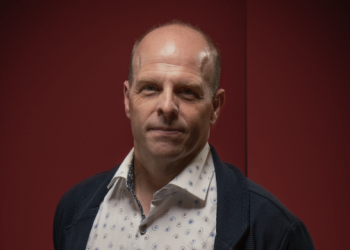
Richard Hall: When Casey and I started Bevel, we kept seeing the same pattern across startups and scaling companies: founders were building incredible products, but their operations were fragile. Systems, finance, people, and process were often stitched together as they went, good enough to get through the next milestone, but not designed to scale. The problem wasn’t talent or ambition. It was the lack of practical, execution-ready operational support at the right stage. Hiring full-time senior operators too early is expensive and risky.
Traditional consulting firms tend to deliver strategies without staying to execute. Staffing firms focus on filling roles, not building the systems those roles need to succeed. Bevel was created to sit in that gap. We built a fractional workforce model that gives startups and SMBs access to experienced operators and embedded teams who take ownership of execution. We help founders build strong operational foundations with people, processes, and systems, so growth becomes intentional, resilient, and sustainable, not reactive.
Bevel positions itself as a fractional workforce rather than a traditional consulting or staffing firm. How does this model create better outcomes for founders?
The difference comes down to ownership and execution. Traditional consultants often deliver a strategy and step away. Staffing firms focus on filling roles and move on once a seat is filled. Bevel was designed differently. We embed fractional operators and functional experts directly into the business, and we stay accountable for outcomes, not just recommendations.
Our fractional workforce model gives founders access to senior-level operational leadership without the cost or risk of hiring full-time too early. It allows teams and systems to scale incrementally, aligned to real business needs rather than fixed org charts. And instead of hiring one role at a time, founders gain a coordinated, cross-functional team spanning operations, finance, people, and systems. The result is faster execution, fewer costly mis-hires, and far greater operational clarity during critical growth phases. Bevel becomes an extension of the founder’s leadership team, deeply embedded, execution-focused, and invested in building systems that last.

From your work with fast-growing tech companies, what are the most common operational challenges that hold founders back from scaling efficiently?
Richard Hall: Across fast-growing tech companies, we see the same operational challenges show up again and again. Founders are doing too much themselves, especially across operations, systems, data, and day-to-day orchestration. The processes that worked when the team was five people quietly break at twenty-five. Hiring often happens before structure, adding headcount without the systems or clarity needed to support it. And as a result, operations become reactive, with teams constantly firefighting instead of building predictability.
These challenges don’t come from a lack of talent or ambition. They come from a lack of operational leverage. When founders don’t have the right systems, visibility, or support in place, growth becomes chaotic by default. Bevel helps founders step out of the weeds by putting repeatable systems, dashboards, and decision frameworks in place. That shift turns scaling from something that feels fragile and exhausting into something intentional, measurable, and sustainable.
How do you think the future of work is changing for startups and SMBs, and where does Bevel fit into that evolution?
Richard Hall: The future of work for startups and SMBs is becoming more modular, outcome-driven, and flexible by necessity, not trend. Founders are under pressure to move faster with fewer resources, and the traditional model of building rigid teams too early simply doesn’t hold up. More and more, founders don’t want to choose between hiring ahead of need or slowing down execution. They want access to the right expertise at the right moment. That shift is driving the rise of fractional teams, embedded operators, and AI-enabled workflows that allow companies to scale capability without locking in unnecessary overhead.
Bevel sits directly in the middle of that evolution. We combine fractional operational leadership, modern systems, and execution discipline to help startups and SMBs build strong operational foundations without committing to outdated org structures. Our model gives founders flexibility early, structure when it’s needed, and systems that scale with the business. The next generation of successful companies will be built with lean cores and adaptable leadership layers. Bevel was designed specifically to support that way of building.
As a COO and co-founder, what leadership lesson has had the biggest impact on how you help founders build resilient, high-performing teams?
The biggest lesson I’ve learned is that clarity beats control. Founders don’t need to be involved in everything to build high-performing teams. What they need are clear priorities, strong operators they trust, and systems that make decision-making visible and repeatable. When teams understand what matters, how decisions are made, and how success is measured, performance becomes sustainable instead of exhausting.
At Bevel, this principle guides how we work with founders. We help replace chaos with clarity by building operating rhythms, accountability structures, and leadership alignment that scale beyond any one person. Resilient teams aren’t built by working harder or adding pressure; they’re built by designing better systems and letting people do their best work within them.

Yugbodh (YB) is a contributing writer at Tech Beat Canada, he skillfully weaves captivating stories. For him tech, music and movies serves as an escape, and he finds them fascinating as they constantly evolve. If you have interesting tales to share, feel free to reach out: info@techbeat.ca