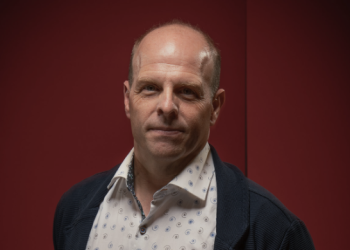

Canada is Totalmobile‘s third international expansion beyond the UK in three years. What made Canada the next strategic market, and what did the company learn from earlier expansions that shapes this launch?
David Sheridan: Canada made sense because there is a strong overlap between the organizations we have spent decades working with and the challenges Canadian organizations are addressing today.
We have significant experience in public services, emergency services, housing, utilities and infrastructure, all sectors with large frontline workforces and complex operational requirements. Totalmobile’s Canadian announcement specifically identified labour shortages, rising service expectations and disconnected legacy systems as factors driving modernization here.
One lesson from international expansion is that you cannot simply take a successful model from another country and assume it will translate unchanged. The technology and experience travel, but the go-to-market approach has to be local. That is why we established a Toronto presence and are building Canadian relationships, delivery capability and partnerships rather than trying to serve the market remotely.
For me, being Canadian and having spent much of my career in the North American technology market is important to that approach. My role is as much about listening to the Canadian market and shaping our investment around it as it is bringing our international experience here. My background includes more than 20 years growing enterprise technology businesses in North America.
You’ve said Totalmobile is “not entering Canada as an unknown quantity.” Which experiences from demanding field service environments abroad translate best to Canadian organizations, and where will the approach need to adapt locally?
David Sheridan: What translates is the operational experience.
Totalmobile supports more than 1,000 organizations and 500,000 workers internationally, with experience across government, health and social care, housing and property, utilities, infrastructure, transport and facilities management. Those environments have many of the same fundamental questions Canadian organizations face:
- Do we have the right people available?
- Can we match resources to demand?
- Can frontline teams access the information they need?
- Can leadership see what is happening operationally?
Where we need to adapt is around the Canadian market itself. Procurement, regulation, service-delivery models and organizational structures vary, and Canada also has important regional and language considerations. We should not presume that experience elsewhere gives us all the answers here.
That is one reason I have spent the early stages of our Canadian expansion meeting organizations directly and working with Canadian partners. We bring the experience, but we need to earn the local understanding.
Canadian organizations are modernizing frontline operations amid labour shortages, rising service expectations and disconnected legacy systems. What does bringing job management, scheduling, rostering and AI-driven intelligence into a single platform actually change for a field team day to day?
David Sheridan: At the simplest level, it connects work that is often managed across separate systems and processes.
Field service management involves coordinating people, jobs, assets, schedules and information. Totalmobile’s FieldFirst platform brings capabilities including job management, scheduling, workforce rostering and field service intelligence together within one platform.
- For a frontline worker, that means having access to relevant job and operational information while working in the field.
- For planners and operational teams, it means better visibility over people, demand and work in progress.
- For leadership, it creates a clearer view of service delivery and operational performance.
The important point about AI is that it should not be the story on its own. The value comes from combining data and intelligence with the operational processes people already have to manage every day. Technology is useful when it makes those decisions easier and frontline work simpler.

You bring more than 20 years of experience growing enterprise technology businesses in North America. How is the field service market in Canada different, and which sectors, such as public services, utilities, housing or emergency services, will you focus on first?
David Sheridan: Canada is not one homogeneous market, and I think that is important for any international company entering the country to understand.
There are different provincial and municipal structures, large geographic distances, significant public-sector organizations and both English and French language requirements to consider. My own approach has been to avoid trying to pursue every sector at once.
Our strongest areas of focus are organizations with complex, regulated or geographically dispersed frontline operations. That includes:
- Public services
- Public safety and emergency services
- Utilities and energy
- Housing and property
- Infrastructure and transportation
Those are areas where our international experience is relevant and where workforce scheduling, rostering, mobile working and field service management are operationally important. Our Canadian go-to-market work has identified those same sectors as priorities.
Having grown up in Toronto and spent much of my career working in Canadian enterprise technology, I also know the importance of credibility here. We have to demonstrate that we understand the Canadian operating environment rather than simply presenting an international success story.
Totalmobile works with partners like CGI and Sopra Steria in other regions. What does “building a strong local presence from day one” look like in Toronto, in terms of the team, partnerships and Canadian customers?
David Sheridan: It starts with being physically present.
We established our Canadian headquarters in Toronto, with the intention of building our customer, partner and delivery ecosystem here. In July, we also announced Toronto-based Locus Systems as our first Canadian strategic partner, adding local implementation, consulting and support capability.
Internationally, Totalmobile works with organizations including CGI and Sopra Steria on field service transformation programs. The goal in Canada is to combine that broader ecosystem experience with Canadian expertise and relationships.
For me, a strong local presence is ultimately quite practical. It means:
- Canadian leadership on the ground
- Canadian partners involved in delivery
- Direct relationships with Canadian organizations
- Over time, a growing Canadian team and customer base
I do not want Totalmobile to be viewed simply as an overseas software company selling into Canada. We are building a Canadian business.
Also Read: Totalmobile expands into Canada