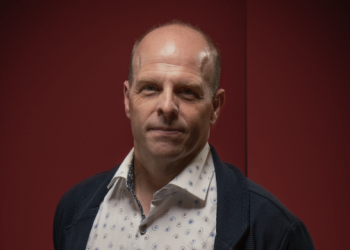
As climate change fuels rising water-related risks, real-time water data is more vital than ever. Canadian startup Tunik is tackling this with smart, durable devices and a bold vision: to make water monitoring as simple as checking the weather. TechBeat spoke with founder Dr. Charles Ramcharan to learn more.
For those new to your work – what is Tunik, and what inspired its creation?
Tunik is making devices for autonomous, long-term monitoring of water environments even in the most remote locations. We can place a device in any waterbody anywhere on the planet and put the data on your phone. The spark for Tunik came in 2012 when I was with a team that was struggling to set up automated environmental monitoring stations in Northern Baffin Island.
It was just too difficult and the results unreliable, and I realized that the problem was neither the sensors themselves that measured the data, nor the satellites flying overhead that relayed the data. The problem was the equipment in between. Designed in the 1980s and hardly changed since then, the large, heavy, power-hungry devices we were using were never meant for automation. They are used hand-held, with the data displayed on an LCD screen and written down by humans. What we needed instead was to reach the GOES satellites zipping by far above us.
The company’s name, Tunik, came from the stories of an Inuit hunter who was our local guide. He told us of a people who occupied the north before the Inuit. He said that the Tunik were small, powerful, and legendary. I thought it was a perfect name for my new company.

You’ve said the goal of Tunik is to make water quality data as accessible as checking the weather on your phone – what inspired that vision, and how close are we to making it a reality?
Every morning, every one of us picks up our phone to check the weather. We do this without thinking about the vast global network that’s gathering those data from weather stations. That’s the level of usability that Tunik wants to reach for water data, and it’s important to do this for two different groups of people.
High functionality will greatly simplify water monitoring for industrial and urban managers in areas such as oil and gas development sites, mining operations, wastewater treatment plants, hydroelectric installations, and urban drainage systems.
But even for everyday or recreational users of water, Tunik’s instruments can provide information on things like chlorine treatment levels, reduced water pressure or outages, harmful algal blooms, and most importantly potential flooding. In 2024, the Golden Triangle area suffered over $1B in flood damage and catastrophic flooding also hit North Carolina and killed over 200 people in Valencia, Spain. Catastrophic floods now hit nearly every country, every year. Tunik can’t stop the flooding but a network of our sensors can provide timely warning and – most importantly – we can help people find areas that are safe.

What are some of the biggest challenges in making real-time, local water quality data widely available, and how is Tunik tackling those hurdles through technology?
Oh, my goodness, what wasn’t a challenge?! I’ve worked in water for over 30 years, and I can tell you that it’s not an easy medium. Currents, waves, and water pressure smash everything to pieces, there’s no easy source of power, and wireless signals go nowhere.
Moreover, anything left in water is quickly coated with a biofilm of microorganisms that interferes with aquatic sensors. In contrast to current hand-operated technology, Tunik’s sondes basically live in the water, so we had to solve all these issues. What’s worse is that when sondes are deployed remotely, such as in a river in Northern Baffin Island, there’s no one around to perform maintenance like replacing fluids and gels in sensors, charging batteries, or recalibrating the instruments.
Our pending patents are for solutions involving sensor sterilization, sensor redundancy, and motorized operation of the sonde, and none of our sensors use anything that needs to be replenished. Power consumption is so low that a sonde running on batteries can operate every day for at least two years.
But the biggest challenge is getting the data out of the water and onto the land. Once on land, ordinary IoT methods such as wireless LANs and satellite telemetry get the data to our web portal – and to your phone. So, how do we get the data out? Our devices, like all sondes, are tethered by a cable and we use that anchor cable for communication with the sonde. I can’t provide details because we are working on three more patent applications, but a big advantage of our approach is that communication with the sonde is bi-directional. This means that any Tunik device can be remotely operated from anywhere in the world.

Can you walk us through what is DOLPHIN and what makes it unique in the landscape of climate and data initiatives?
The Dolphin system includes different models of sondes, land based wireless gateways, and motorized actuators. The whole system is user serviceable because everything is modular. Importantly, we’ve extended modularity to the inside of our sondes and actuators. The “right to repair” idea is moot with Tunik, since a user can modify any of our sondes to get the capabilities they need. These features make our devices quite unique. However, what people see from the outside is attractive and functional industrial design, but Tunik’s real product is the part you can’t see – the database.
We’re in a unique market position because no other company is offering devices that are designed specifically to stream water data to the web. As our installed base of sondes grows, it won’t take long to create large data sets, so design of our data system was a top priority. I have spent too many years fighting with large (>3 million lines) sets of environmental data and all that I have learned is embedded in Tunik’s data system: Tunik’s data never touch human hands, and the metadata (e.g., sampling location, individual sensor identification, operator ID, relevant operating conditions) are always encoded with the data themselves.
Check Ontario Water Quality Here
A database is never sexy or even cool, but you’ll quickly become a fan when you sit down to work with the data. And how about not working with the data? Tunik is planning two other neat features. One is an AI based system for data analysis, prediction, and report generation. The second innovation is an open data model.
Like other companies, Tunik has an annual fee for data streaming, housing and management. However, users have the option of paying a reduced (“at cost”) fee, if they allow some or all their data to be open for public use. For management agencies such as municipalities, parks, and conservation areas, Tunik will not only be providing real-time water data but will relieve them of the need to set up, manage, and maintain their own data portals. Industries such as oil and gas developers or mining companies may take advantage of the open data option as a means of building public trust, or “social licence to operate”.
What does success look like for Tunik – both in terms of environmental outcomes and community impact?
Tunik’s vision is to do for water what automated weather stations do for atmosphere – help us to live and function effectively. In a broader sense, it’s unsettling to say the least that we can now hear the ticking of the climate change clock. My last academic appointment was as a professor in Laurentian University’s School of The Environment, so I know what’s coming. Tunik is my way of helping. There is no human activity that does not involve water. We can’t build a sustainable global economy without reliable water monitoring.
Tunik isn’t just building sensors – it’s building a future where water data flows as freely as the water itself. By combining robust engineering with thoughtful data design and an ethos of accessibility, the company is setting a new standard for environmental monitoring. Whether it’s preventing flood damage, empowering industrial operations, or enhancing public trust through open data, Tunik is proving that the future of water is not just about awareness – it’s about action, insight, and resilience.

Yugbodh (YB) is a contributing writer at Tech Beat Canada, he skillfully weaves captivating stories. For him tech, music and movies serves as an escape, and he finds them fascinating as they constantly evolve. If you have interesting tales to share, feel free to reach out: info@techbeat.ca