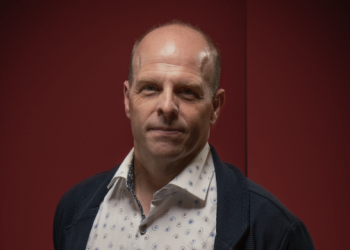
The spark for BettyBlockchain came early in my career when I was coordinating the first payphone installations in remote villages in the Peruvian Andes. I saw firsthand how access to something as basic as a phone line could reshape a community’s connection to opportunity. It showed me what inclusive tech could do, not in theory, but in real life.
That experience stayed with me. Over the years, I worked across global payments and fintech, watching legacy systems consistently leave people behind. When I discovered blockchain, it felt like finding the infrastructure layer we’d been missing all along. BettyBlockchain is the result of that journey, built on the belief that we can redesign financial and technological systems to serve more people, more fairly. It’s not about hype. It’s about access, accountability, and making sure no one is excluded from the next chapter of innovation.
What are some of the most significant challenges you’ve encountered in the blockchain industry, and how have you addressed them?
The biggest challenge has been the narrative around blockchain. For too long, the conversation was dominated by crypto scams and speculation, and the real potential of the technology got drowned out. People dismissed it before they even understood it.
I caught my share of criticism for stepping into the space, professionally and personally. But I leaned into the academic side, earning my MSc in Blockchain and Digital Currencies. It gave me the time and space to explore the fundamentals, connect with a global network of thinkers, and cut through the noise. That grounding gave me the clarity I needed to keep going.
Emerging technologies follow a pattern: first they’re feared, then dismissed, then resisted, tolerated, accepted and finally, embraced. Blockchain is on that path. My focus has always been to stay steady, lead with substance, and help others see the deeper value.

How do you envision the future of blockchain technology in the next five years, particularly in relation to global payments?
Blockchain is becoming the infrastructure layer for global payments, quietly, but undeniably. Just as Banking-as-a-Service (BaaS) accelerated fintech, we’re now seeing the rise of Crypto-as-a-Service (CaaS): custody, compliance, and cross-border capabilities bundled into tools that developers and institutions can use out of the box.
Stablecoin adoption is already underway, PayPal’s PYUSD, USDC integrations, Visa’s on-chain deployments. In five years, blockchain won’t be visible to most users, but it’ll be everywhere. Behind the scenes, it’ll be enabling instant, low-cost, and compliant transfers of value across global borders.
What excites me most is what this unlocks: faster remittances, access to financial tools for underserved regions, and a complete rethinking of how institutions manage liquidity and settlement. Blockchain is revamping traditional finance while at the same time rewiring “the pipes”.
Can you discuss any initiatives or projects at BettyBlockchain that aim to educate or empower underrepresented groups in tech?
At BettyBlockchain, we’re focused on helping the right people get access to the right tools, especially in sectors where the imbalance is sharpest. One area I’m deeply committed to is AgriTech. Smallholder farmers grow 70% of the world’s food but capture very little of the value. We work with founders building blockchain and AI-based solutions to help rebalance that equation, whether through transparent pricing, direct-to-market access, or tokenized incentives.
We’re also supporting sustainable soil regeneration and clean energy projects. These are often overlooked by traditional funding models, but with tokenization of real-world assets, we’re helping unlock capital in new ways. The goal isn’t just adoption, it’s using this tech to build systems that are smarter, fairer, and built to last.
What advice would you offer to aspiring entrepreneurs looking to enter the blockchain space?
Get clear on your why. This space moves fast, and there will be roadblocks. If your why is solid, you’ll stay grounded through the noise.
Adopt a Web3 work mentality. This isn’t a 9-to-5 industry, it’s a forward-leaning, always-learning lifestyle. You don’t have to live online, but you do need to stay plugged into what’s happening. If you wait to catch up, you’ll already be behind.
And above all: bring value. This industry doesn’t need more noise. It needs people who are serious about building, educating, and professionalizing. Build credible networks. Give more than you take. Help move the space forward and do it with intention.
Work with BettyBlockchain: Reach out via LinkedIn: BettyBlockchain

Yugbodh (YB) is a contributing writer at Tech Beat Canada, he skillfully weaves captivating stories. For him music and movies serves as an escape, and he finds them fascinating as they constantly evolve. If you have interesting tales to share, feel free to reach out: info@techbeat.ca