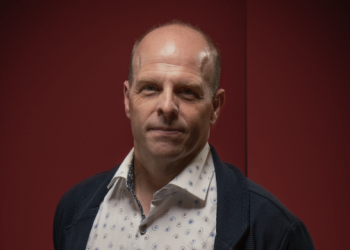
You started your entrepreneurial journey in grade 7 after a deeply personal experience. How has that early sense of purpose shaped the way you approach building companies today?
It taught me to build now and think later, to figure things out as they come. When you are trying to create something meaningful, it is tempting to map everything out ten steps ahead. But in startups, you cannot predict what is next. I think of entrepreneurship as its own world built from society’s problems. Founders explore it by solving them.
A startup exists to tackle a problem nobody has solved before, or to solve it better. That means there is no playbook, no structure, just constant navigation through the unknown. Founders who try to engineer every step end up building imaginary mountains in their heads, full of problems that do not exist yet. That is how analysis paralysis happens.
Being a beginner gives you the freedom to dive in without overthinking. You underestimate the difficulty, but that is necessary when you are building something that matters. I have not built something world changing yet, but when I do, it will come from that same beginner’s mindset: build first, figure it out later.
Antifragility Labs takes a unique stance on the future of Generative Engine Optimization that it’s too early for a single sustainable solution. Can you expand on that philosophy and how it guides your product strategy?
Antifragility Labs has a contrarian take on GEO, and it defines everything we build. We are a software first agency helping businesses rank on both AI and search engines. We have worked with YC backed startups, top podcasts, ecommerce brands, and major VC firms.
Our thesis: it is too early to bet on a single GEO solution. If you study the early SEO market, it was volatile, a cat and mouse game where people exploited algorithms until platforms adapted and reset the rules. We are seeing the same cycle now. Take Reddit. It used to dominate AI rankings until Google changed the num=100 parameter. Overnight, visibility dropped, GPT citations of Reddit content fell from 14 percent to 2 percent, and Reddit’s stock slid 13 percent in five days. That volatility proves our thesis: what works today will not work tomorrow.
While GEO startups are raising big rounds, we think they are too early. The landscape shifts too fast. Right now, SEO and GEO have to work together. AI optimized blogs help, but search ranking still drives the majority of visibility. That is why we build tools for both.
Being software first keeps us accountable. We break problems into first principles, build weekly, and adapt fast. We have gotten clients cited in AI within 24 hours, boosted impressions 20 times, moved sites from non indexed to first page, and increased backlinks and clicks severalfold.
What sets us apart is that once we deliver results, we hand clients the custom software we built for them so they can continue ranking without ever needing another agency. Once the market stabilizes and we see something truly sustainable, we will evolve from agency to startup. Until then, we are staying agile, building through evidence and experience, not theory.
You’ve already interned at top startups like Wealthsimple and Armilla AI. What lessons from those environments have most influenced how you lead and build at Antifragility Labs?
Both shaped how I think about learning and execution. At Armilla AI, I learned that curiosity matters more than knowing everything. When I joined, I barely understood SEO, I literally googled the definition during my first call with the founder. But I offered to work for free until I delivered results, spent nights studying SEO content, cycling through free trials of paid tools, and eventually brought Armilla from non indexed to first page results with major growth in clicks and impressions.
That experience taught me that learning is accessible, and that you should start before you are ready. At Wealthsimple, I learned the value of creating your own opportunities. On my first day, I reached out to someone on the product team about a challenge I was curious about. That single outreach opened doors to incredible learning moments.
I carry those lessons into Antifragility Labs. Our model, move fast and learn faster, comes from Armilla. Our client base comes from taking initiative, like when my cofounder and I claimed an empty booth at the Elevate open house to pitch live. Opportunity rarely knocks twice, so I have learned to make my own.
The GEO landscape changes weekly, and your team ships just as fast. What does your workflow or mindset look like when operating in such a fast-moving, uncertain environment?
Our mindset is simple: ship fast, learn faster.
In uncertain environments, adaptability is everything. Our name, Antifragility Labs, comes from Nassim Taleb’s concept of becoming stronger through volatility. “Wind extinguishes a candle and energizes a fire,” he says. We aim to be the fire.
We do not hide from uncertainty, we grow through it. We focus on evidence, building directly from client problems rather than trends. Every tool we make solves a real need. If it works, clients see results. If not, we learn fast. Speed and learning drive everything. In a market that shifts weekly, the best founders are not the smartest, they are the best learners. I live by Eric Hoffer’s quote: “In times of change, the learners will inherit the earth.”
You’ve described yourself as someone who just loves building from AI tools to desalination projects. Looking ahead, what kind of problems do you hope to solve in the next few years, and what keeps you curious as a founder?
I am 17. There is so much more to experience, and those experiences will shape what I build. I believe founders become obsessed with solving problems that personally affect them. That is where meaning comes from. Curiosity fuels everything I do. When you are deeply invested in solving a problem you care about, the work does not feel like work, it becomes purpose. There is no roadmap, no guaranteed outcome, and that is what makes it worth chasing.
There are countless unicorns in the world, but only a few truly make an impact. My goal is not just to build one, it is to build something that matters.

Kavish Jha is a contributing writer at TechBeat Canada, where he highlights the stories behind Canada’s most innovative founders and startups. Passionate about technology, creativity, and community, he brings a storyteller’s lens to every feature. When he’s not exploring the next big tech trend, you’ll find him diving into marketing strategy or discovering inspiring creators.
📩 Reach out: Kavish@techbeat.ca