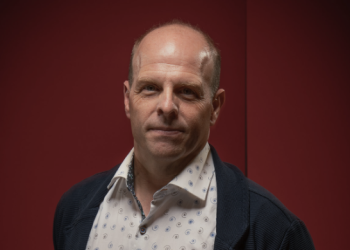

For the past decade, the playbook for building an enterprise software company was fixed: raise a seed round, raise a Series A, hire ahead of revenue, and hope the market arrives before the money runs out. Yasser Elsaid never opened that playbook.
In early 2023, while finishing his computer science degree in Canada, Elsaid spent two months building a tool that let anyone train a conversational AI agent on their own data. He announced it on Twitter to 16 followers. The post went viral, the first paying customer arrived within 30 minutes, and Chatbase was born.
Three years later, the company looks nothing like a side project. Chatbase is now an omnichannel AI customer support platform – chat, voice, email, and messaging powered by a single agent configuration – with access to 35 AI models from seven providers, SOC 2 Type II certification, GDPR and HIPAA compliance, and integrations across Zendesk, Salesforce, Intercom, HubSpot, Stripe, Shopify, Slack, and WhatsApp. In May, the company crossed US$10 million in annual recurring revenue and launched Chatbase Voice, extending its agents to inbound phone calls. It has raised exactly zero dollars in outside funding.
In a market where every major competitor is venture-backed and burning capital, Elsaid has become one of the most closely watched voices on a question the global tech ecosystem is only beginning to grapple with: what happens when AI makes the venture treadmill optional?
We spoke with him about the milestone, the pivot that saved the company, and why he believes the next decade belongs to small, profitable, AI-native teams.
Chatbase just crossed US$10 million in annual recurring revenue without raising outside capital. What does that number actually mean to you?
Yasser Elsaid: Ten million is just a number, but I think it signifies that we were able to do this without spending money in the early days. We built a real company – 10,000-plus business customers in more than 80 countries, enterprise clients, a strong team – purely on revenue from the product itself.
And now I think this is a turning point. Because we’ve had this revenue for the last two years, we can operate with the aggression and the investment strategy of a venture-backed company, except the fuel is our own revenue, not someone else’s capital.
Most coverage of bootstrapped companies frames them as scrappy underdogs. You’ve pushed back on that framing. Why?
Yasser Elsaid: Because it’s not accurate anymore. The story people like to tell is the small team punching above its weight, and I understand why – it’s a fun story. But the reality is that Chatbase competes directly with companies that have raised hundreds of millions of dollars, and we win enterprise customers they are chasing.
We’re SOC 2 Type II certified, GDPR and HIPAA compliant, and we integrate with the entire stack enterprises already run. The bootstrapped origin isn’t a limitation we overcame. It’s proof of product quality. Nobody bought Chatbase because of a pitch deck. Every customer we have is there because the product worked.
“The bootstrapped origin isn’t a limitation we overcame. It’s proof of product quality. Nobody bought Chatbase because of a pitch deck.”

There’s a structural argument underneath that, isn’t there? Your competitors’ incentives are fundamentally different from yours.
Yasser Elsaid: That’s exactly right, and I think it’s the most underappreciated dynamic in our market. If a company has raised enormous amounts of venture capital, its only acceptable outcome is total market domination – it has to become a $10 billion company to justify the valuation. That shapes everything: how it prices, how it acquires customers, how much it’s willing to lose to grow. We’re already profitable.
We don’t need to win the entire market to win. That means we’re not burning capital to acquire customers we can’t afford to keep – we build for retention and long-term value, because that’s what our survival has always depended on. Customers feel that difference, even if they can’t always name it.
Let’s go back to the beginning briefly. You interned at Tesla and Meta – the dream track for most computer science students. What pushed you off it?
Yasser Elsaid: Everyone in my program had the same goal – get the FAANG internship in California. We called it ‘Cali or bust.’ I got it. I did Tesla, then Facebook. And very quickly I realized this was not the environment for me. It felt too safe, too structured.
Honestly, I don’t think I used much of what I learned at those big companies. What I used was everything I learned building small projects on the side – a few of them got real users, and that gave me evidence that independent product development was viable. When I didn’t get a return offer from Meta, it felt like a setback. In hindsight, it was the best thing that ever happened to me.
When ChatGPT launched in late 2022, thousands of developers saw the same technology you did. What did you see that they didn’t?
Yasser Elsaid: There was one idea that seemed obviously valuable and that nobody was building as a standalone product: connecting a large language model to your own documents and knowledge base, and querying it conversationally. It felt like if I didn’t build it now, someone else would, because to me it was such an obvious idea.
So I built it in about two months while carrying a full course load. But the deeper insight was about trajectory, not the product itself. It was obvious to me that these models would improve. I didn’t know how, and I didn’t know when. But if the models improve and I’ve built the harness around them that lets them do new things, then I’m winning – and my customers are winning too. That principle still drives our roadmap today.
Within months of your launch, the market was flooded with near-identical ‘chat with your PDF’ tools. That kills most young companies. How did you survive it?
Yasser Elsaid: By moving before the market forced us to. We pivoted from a consumer-facing tool to a business-facing AI agent platform – agents that take actions, escalate to humans, plug into business systems – before that category really had a name. It raised the technical barrier to entry and pointed us at a much larger, more defensible market.
I’d compare it to how Slack started as an internal chat tool for a gaming company and grew into a platform competing with Microsoft. Chatbase started as ‘ChatGPT for your PDFs.’ Today it’s a unified platform where one agent configuration runs across chat, voice, email, and messaging. The lesson for founders is that your first product is a wedge, not a destination.
You’ve said the most common mistake bootstrapped founders make is ‘having the mindset of a bootstrapped founder.’ That sounds like a contradiction. Unpack it.
Yasser Elsaid: Being extremely cost-efficient with everything, always making sure you’re ROI-positive, being risk-averse – that mindset is what gets you to profitability, and then it becomes the thing that caps you. If you want to build something huge, the biggest mistake is not being aggressive enough. The flip side is that bootstrapped founders have a genuinely unfair advantage: the bar for success is lower.
A venture-backed competitor needs a billion-dollar outcome to succeed. If you operate with their ambition but your economics, you can get close to what they achieve – and be successful much, much earlier. That’s the balance I try to hold: venture-scale aggression, bootstrapped accountability.
Chatbase reached US$8 million ARR with just 18 people, 11 of them engineers. Now you’re at 26. What does that team composition say about how you compete?
Yasser Elsaid: The product is the moat, so the team is mostly people who build the product. Every company in this space has roughly the same feature list now – that’s the reality of AI software. So the things you can actually compete on are user experience and brand. My internal test is simple: you need a product impressive enough that a person wants to flex that they discovered it before other people.
The other thing an engineering-heavy team buys you is velocity, and velocity is a retention strategy. The reason our churn is low is that customers see the product improve every single day. Even when a specific update isn’t something a customer needs, the constant shipping sends a signal: we are building this for you. That signal compounds.
How do you make decisions in a market that changes this fast? The ground shifts under AI companies monthly.
Yasser Elsaid: Every day we wake up and we look at the inputs. We know why we made a decision two weeks ago – but we also know what has changed since. And if what changed means a different decision now makes sense, you make it, one hundred percent of the time. Going back on a bad decision should be encouraged when you’re building in an industry moving this fast.
Too many founders treat reversing a decision as a loss of face. In this market, refusing to reverse one is how you die. The other thing I’d say, especially to early-stage founders: don’t spend two years building in secret. Build something very small, make it robust, make it genuinely useful, and then share it. And ignore the noise. People will speculate – maybe they’re right, maybe they’re wrong – but you lose nothing by putting your head down and building something valuable. I’m glad I did that three years ago.
Chatbase serves organizations ranging from IHG, Miele, National Grid, Noon, Chuck E. Cheese, Bridgestone, and F45 Training. Which customer success story best demonstrates the business impact of AI agents?
Yasser Elsaid: One of my favorite examples is a large e-commerce deployment where the company was struggling with abandoned carts, slow response times, and a growing support workload. Customers often had questions outside business hours and there simply wasn’t anyone available to answer them.
After implementing a Chatbase AI agent trained on their product catalog, support knowledge base, and customer workflows, the business reduced repetitive support tickets by 68%, cut response times from hours to seconds, and achieved a threefold increase in revenue within six months. The AI agent was able to answer pre-purchase questions, recommend products, and help customers complete purchases at any time of day.
What’s interesting is that the technology behind that success is the same platform used by global organizations such as IHG, Miele, National Grid, Noon, Chuck E. Cheese, Bridgestone, and F45 Training. The specific use case may differ—from customer support to lead qualification to customer engagement—but the outcome is remarkably consistent: faster service, better customer experiences, and measurable business growth.
For me, that’s the real story of AI agents. It’s not about replacing people. It’s about giving every business, regardless of size, the ability to deliver enterprise-grade customer experiences at scale.
Canadian Clients: “686 Business Consultants Canada“ is the strongest Canadian customer example because it shows how a small consulting firm used Chatbase to automate client engagement, answer questions instantly, qualify leads, and route complex inquiries to human consultants when needed. It’s a powerful example of how Canadian SMBs can use AI to operate like much larger organizations without significantly increasing headcount.
Sam Altman has talked about the coming ‘one-person billion-dollar company.’ You’re often cited in those conversations. Is that future real?
Yasser Elsaid: We’re not there yet – but the direction is unmistakable. What we’re already seeing is companies bootstrapping to millions in revenue at a speed that simply wasn’t possible before, because AI has collapsed the cost of building. My prediction is an explosion of bootstrapped companies doing numbers that used to require $50 million in venture capital: small teams, maybe 10 to 50 people, with dramatically higher revenue per employee than the previous generation of software companies.
This is the era of the smaller company. I think of it as the AI wave’s first generation of founders building enterprise companies without permission – without needing Silicon Valley to validate them first. Chatbase is one data point. There will be many more.
You launched Chatbase Voice in May. Where does the platform go from here – and where does the company go?
Yasser Elsaid: Voice was a natural extension: the same knowledge base, the same actions, the same escalation logic that powers our chat agents, now answering inbound phone calls. The vision is one intelligent agent that represents your business consistently everywhere a customer reaches you – chat, voice, email, messaging.
On the company side, the priorities are clear: move further upmarket, keep investing in the engineering team, and build out a serious growth function now that the product foundation is stable. We’re also planning to base the team in New York – 98 of our top 100 target customers are there. If we operate like a venture-backed company, I think we can reach $100 million in the next few years.
Maybe two. And honestly, it’s fun. It’s fun to build a company, to grow it, to talk to customers and see they’re getting real value. That hasn’t worn off.
Last question. For a founder reading this in Toronto, Cairo, Lagos, or anywhere outside the traditional tech capitals – what do you want them to take away from your story?
Yasser Elsaid: That you control more than you think. In building a company, especially early on, especially when you’re solo, the outcome is one hundred percent correlated with the inputs you put in. You control all the inputs, and the output is the result of those inputs.
Knowing you control your own destiny gives you real comfort – and the tools now exist for that to be true almost anywhere in the world. I’m from Egypt. I moved to Canada for university. I launched a product to 16 Twitter followers. None of the traditional gatekeepers were involved at any point. The infrastructure of permission is gone. What’s left is execution.