
Many technical founders still approach fundraising believing product strength and early traction are enough. From an investor perspective, what Go-To-Market (GTM) signals truly determine fundability at the pre-seed to Series A stage?
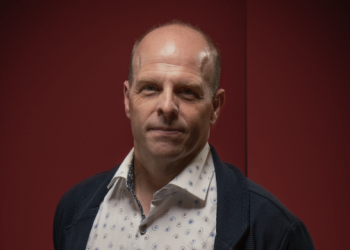
Laney Lui: Technical founders often walk into pitch meetings leading with product demos and big TAM slides. But investors have seen too many great products fail to commercialize. What they’re really evaluating is whether you can build a repeatable, scalable commercial engine, not just a shiny prototype.
The signals shift by stage, but the themes are consistent: focus, repeatability, and economics.
At pre-seed, investors back founders who show sharp Ideal Customer Profile (ICP) clarity backed by early commercial validation. That means structured discovery (think 50+ customer interviews revealing a clear problem) plus LOIs or pilots demonstrating real demand. A testable GTM thesis, who you serve first and how you’ll reach them, is table stakes.
By seed, the bar jumps to revenue and repeatability. Expect to show $50K to $500K ARR with 15 to 30% month-over-month growth, pipeline coverage at 3x your next quarter target, and first non-founder sales wins. CAC payback under 12 months and net retention above 110% prove the motion works beyond founder heroics.
Series A demands predictable scale. Investors want $2M to $10M ARR with 2 to 3x year-over-year growth, strong balance of growth and efficiency (Rule of 40 above 60), forecast accuracy over 80%, and team-led deals dominating pipeline. They’re looking for NRR above 120% and CAC payback down to 6 to 9 months.
The 2026 trend is clear: VCs now prioritize GTM proof over product hype. Pre-seed now wants pilots. Seed wants revenue. Series A wants predictability. Founders who build these signals early raise faster at better terms.
Before raising capital, what specific GTM strategies, systems, or artifacts should founders have in place to demonstrate clarity, repeatability, and execution readiness during investor diligence?
Founders who raise smoothly show investors a system in motion, not a slide deck.
- Start with a documented ICP wedge and GTM thesis: who you serve first, their pains, and your repeatable motion, backed by customer research and early wins. Pair that with pricing clarity, willingness-to-pay data and simple packages you’ve actually tested in market.
- Set up a basic pipeline system. That can be a CRM or even a well-structured spreadsheet with defined stages from lead to close, weekly reviews, and clean attribution. You don’t need enterprise software, but you do need consistent definitions and a forecasting rhythm you can explain without scrambling.
- For diligence, prepare a metrics dashboard showing trends: ARR growth, CAC payback, net retention, and pipeline coverage by stage. Add customer proof, cohort data showing stickiness, case studies with quantified ROI, and a list of referenceable customers willing to take a call.
These aren’t nice-to-haves. They’re what de-risks your story. Investors see countless decks. Artifacts show you’re already operating like a funded company.
A common pattern is founders treating these artifacts as a fundraising checklist rather than an operating system. The founders who raise well aren’t creating these documents for investors. They’re running their business this way already, so the documents just capture what’s true.
Once a round closes, expectations change quickly. What are the most common GTM execution gaps you see in the first few months post-funding, and why do they often put companies at risk of missing targets or needing bridge rounds?
The same gaps kill momentum across stages: premature scaling, data chaos, and retention neglect.
- The most common mistake is hiring reps or ramping ad spend before the playbook and ICP are truly locked. Founders feel pressure to deploy capital quickly, so they hire two or three salespeople in month one. Six months later, those reps aren’t closing because the motion wasn’t repeatable to begin with. The playbook existed in the founder’s head, not in a system others could run.
- The second gap is neglecting RevOps. Messy CRM data and inconsistent forecasting mean you can’t explain misses, and that erodes investor trust fast. If you can’t point to data showing why a quarter fell short and what you’re fixing, you lose credibility.
- Weak customer success is the third killer. Teams pour energy into new logo acquisition and underinvest in onboarding & customer success. Net Revenue Retention drops below 110%, expansion happens by luck rather than by design, and net new ARR disappoints even when top-of-funnel looks healthy.
Recent data shows nearly 40% of seed and Series A financings are now bridge rounds rather than new priced rounds. While some of that is market conditions, a significant portion comes down to execution gaps: companies that raised but couldn’t hit the metrics needed for their next round. Missed early quarters signal “maybe no real GTM fit,” forcing founders into weak terms or extensions from existing investors.
The fix is sequencing: playbook first, then scale. It sounds obvious, but the pressure to show momentum after a raise makes it hard to slow down and get the foundation right.
How can founders structure GTM metrics and investor updates in a way that not only reports progress, but actively builds confidence for the next round?
Investor updates aren’t governance. They’re how you build the trust that makes your next round a conversation, not a cold pitch.
Here’s what most founders miss: investors aren’t just evaluating your metrics. They’re evaluating your judgment. Every update is a window into how you think, how you respond to problems, and whether you’re the type of founder who succeeds.
- Show you can see around corners. Founders who raise smoothly spot problems before they become crises. If churn spiked and you caught it in month one, adjusted, and it’s stabilizing by month three, that builds trust. If you report it six months later as a surprise, investors start wondering what else you’re missing.
- Be honest when it hurts. Investors read hundreds of updates. They can smell spin. What I’ve learned from conversations with early-stage investors is that when a founder says “we missed revenue target by 15%, here’s why, here’s what we learned, here’s what’s changing,” they lean in. When founders bury bad news or explain it away, investors start preparing for a hard conversation. The founders who get follow-on checks are the ones who surface bad news fast.
- Know which levers matter. Most founders report too many metrics. The ones who raise smoothly can say: “The one thing that unlocks our next phase is X. Here’s how we’re moving it.” For early-stage B2B, that usually means ARR growth, CAC payback (under 12 months at seed, under 9 at Series A), net retention (above 110%), and pipeline coverage (3 to 4x). Pick the ones that matter for your business and show trends over time.
- Make your forecasts mean something. If you say you’ll hit $500K ARR by Q3 and you hit $480K, investors trust your next forecast. Miss by 40% twice, and they stop believing your plans. By Series A, investors expect forecast accuracy above 80%. Start building that track record at seed.
- Pre-sell your next round. If Series A investors care about team-led deals and forecast accuracy, start reporting those metrics now, even when they’re ugly. Show the progression over 12 to 18 months. By the time you raise, investors shouldn’t be learning your story for the first time. They should already be rooting for you because they’ve watched you execute.
One more thing: investors have 20 to 30 portfolio companies. The founders who communicate well stay top of mind. When investors hear about an opportunity, a potential customer, or a candidate, they think of those founders first. The ones who go dark get forgotten until they need something.
Looking across the founders you work with, what separates teams that scale smoothly after funding from those that struggle, even when the product and market opportunity look strong on paper?
Laney Lui: The separator isn’t product. It’s operational DNA: focus over distraction, systems over heroics, transparency with investors.
Teams that scale smoothly treat GTM as a system, not a series of disconnected tactics. They pick an ICP wedge and stay focused. They document what’s working as they go, so the playbook exists outside their heads. They run weekly pipeline reviews, track leading indicators, and make small adjustments based on data rather than big bets based on intuition.
They’re also predictable with investors. Updates come on schedule, metrics stay consistent, and when something breaks, they flag it early with a plan. That builds trust and makes the next raise a conversation, not a scramble.
Strugglers often have strong products and real market opportunity, but they chase features or hire to show investors they’re scaling rather than hiring for specific gaps. They treat GTM as something to figure out later, assuming a great product sells itself. Even with strong tech and TAM, they stall on scrappy motions that don’t scale.
There’s also a founder identity piece, and this is often the hidden blocker. Scalers make peace with evolving their role from closing every deal to building a system others can run. Strugglers stay attached to being the closer. They build processes, but the processes don’t stick because they don’t fit how the founder actually sells.
This is where I focus at Zenful Sales: co-creating a sales process that fits the founder, so it’s something they’ll actually use and eventually hand off, not a framework that collects dust. Build these habits before the round, and funding becomes fuel, not friction.
To get more insights: Zenful Sales

Yugbodh (YB) is a contributing writer at Tech Beat Canada, he skillfully weaves captivating stories. For him tech, music and movies serves as an escape, and he finds them fascinating as they constantly evolve. If you have interesting tales to share, feel free to reach out: info@techbeat.ca