
What’s the difference between Physical AI and generative AI, and why does it matter for sectors like transportation and utilities?
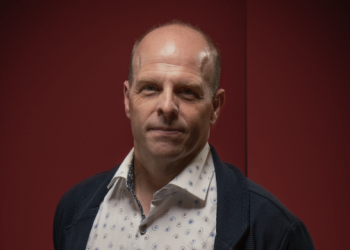
Jamil Shinawi: People keep flattening “AI” into one category, and that’s where the confusion starts. Generative AI is optimized for language and content, it can tolerate a few hundred milliseconds of latency because nobody’s hurt if a chatbot takes an extra second to respond. Physical AI is different. It’s making decisions about things that move in the real world, vehicles, intersections, a grid switch, where the cost of latency isn’t inconvenience, it’s failure.
That means the compute has to sit at the edge, close to the sensors, not round-tripping to a data center somewhere. It means the system has to keep working when connectivity drops, because physical infrastructure doesn’t get to pause when the network does. And it means every decision has to be traceable and explainable, because you’re accountable to regulators, operators, and the public in a way a language model never has to be.
That’s the whole design premise behind AHOY GTS and IITS. GTS fuses edge sensor data in real time without depending on cloud connectivity or a GIS layer like Google Maps or OpenStreetMap. IITS turns that fused picture into traffic decisions on-prem, in the field, in the milliseconds that actually matter. Sovereign Physical AI isn’t a branding choice, it’s an admission that this category needs a completely different architecture than the one generative AI was built on.
Why bring on a channel partner like Will Be Live now, rather than earlier?
Jamil Shinawi: We didn’t inherit Will Be Live, we went and found them. When you’re entering a new region, you have two options: spend years building trust with transportation authorities and utilities from zero, or partner with someone who already has that trust and already knows how procurement actually works inside those institutions.
Will Be Live has real, independent relationships with municipal buyers and infrastructure operators across North America, and they understand the procurement mechanics that determine whether a deployment takes six months or three years. That’s not a capability we could shortcut, and it’s not one we wanted to rebuild in-house when the right partner already existed in the market.
This is going to be our channel model throughout 2026 as we expand: find the operators who already have the trust and the relationships, and let them lead the market motion while we lead the technology.
It’s also worth being clear about what this partnership means concretely for Canada. It’s tied directly to us establishing our Canadian entity in Montreal, which brings 200 direct jobs and, by extension, thousands of indirect jobs into the ecosystem around it. This isn’t a symbolic regional announcement, it’s the operating model for how we plan to scale.

What does AHOY give up by growing through resellers and system integrators instead of direct enterprise sales?
Jamil Shinawi: Our CSO, Mohannad El-Barachi, put it well: ecosystems scale faster than companies. That’s true, and I’m not going to pretend the trade-off isn’t real. When you go direct, you keep full control, over the sales conversation, the margin, the relationship, the pace. When you go through partners, you give some of that up in exchange for speed and reach you couldn’t otherwise buy. You’re trusting someone else’s judgment in rooms you’re not in.
The honest answer is that direct sales protects control and margin, and channel partnerships buy you velocity and access, and in a category like ours, where the buyers are governments and utilities with long procurement cycles and deep institutional trust requirements, velocity and access are often the harder constraint to solve than margin.
So we’re not choosing ecosystem because it’s free, it isn’t, we give up some control to get it, we’re choosing it because in this market, the speed to credibility matters more than owning every inch of the transaction. We stay disciplined about which partners we work with precisely because that trade-off is real, not imaginary.
How does working with governments and critical infrastructure operators change your approach to trust, auditability, and deployment?
Jamil Shinawi: Government and critical infrastructure buyers don’t take our word for anything, they verify it, then verify it again. Every deployment runs fully on-premises, inside the customer’s own sovereign perimeter, with no data leaving their perimeter. Authentication runs through city-issued PKI, not a credential we control. And the action layer, the part of the system that actually does something in the physical world, was built to be auditable, traceable, and explainable from day one, not retrofitted after the fact because a regulator asked.
That’s a different posture than most software companies operate under, and it’s deliberate. Once we’re in, we’re not a vendor renewing a license, we’re integrated into how a city or a utility runs its physical operations, and that’s a relationship that compounds in value the longer it runs, not one that decays. The trust bar to get in is high. But so is the switching cost, and that’s by design, not by accident.

What does success look like a year from now?
Jamil Shinawi: I’m not going to hand you a number for this partnership that I haven’t earned yet, that’s not how I want to talk about a deal that just started. What I can tell you is how we’ll actually judge it.
First, are we in front of the right buyers, the transportation authorities and utility operators who have real budget and real mandates, not just interested parties. Second, is procurement actually moving, are conversations advancing through the stages that historically stall out for outside vendors. Third, is the cycle compressing, is the time from first conversation to signed deployment shrinking because Will Be Live’s relationships are doing what we brought them in to do. Those are the signals that tell us the partnership is working, long before any revenue number would.
Zooming out, we’re on a trajectory toward roughly $1 billion in top-line revenue by next year, driven by global expansion across the US, Canada, and LATAM. Will Be Live is a key enabler of the North American piece of that, they’re not a side deal, they’re core to how we execute that expansion. And on the Canadian side specifically, the commitment is concrete: 200 direct jobs as we stand up our Montreal entity, with thousands more indirect jobs following from that. That’s what I’m accountable to a year from now.
Jamil Shinawi, AHOY is the speaker at Startup Fest Montreal – July 8 -10 Montreal